
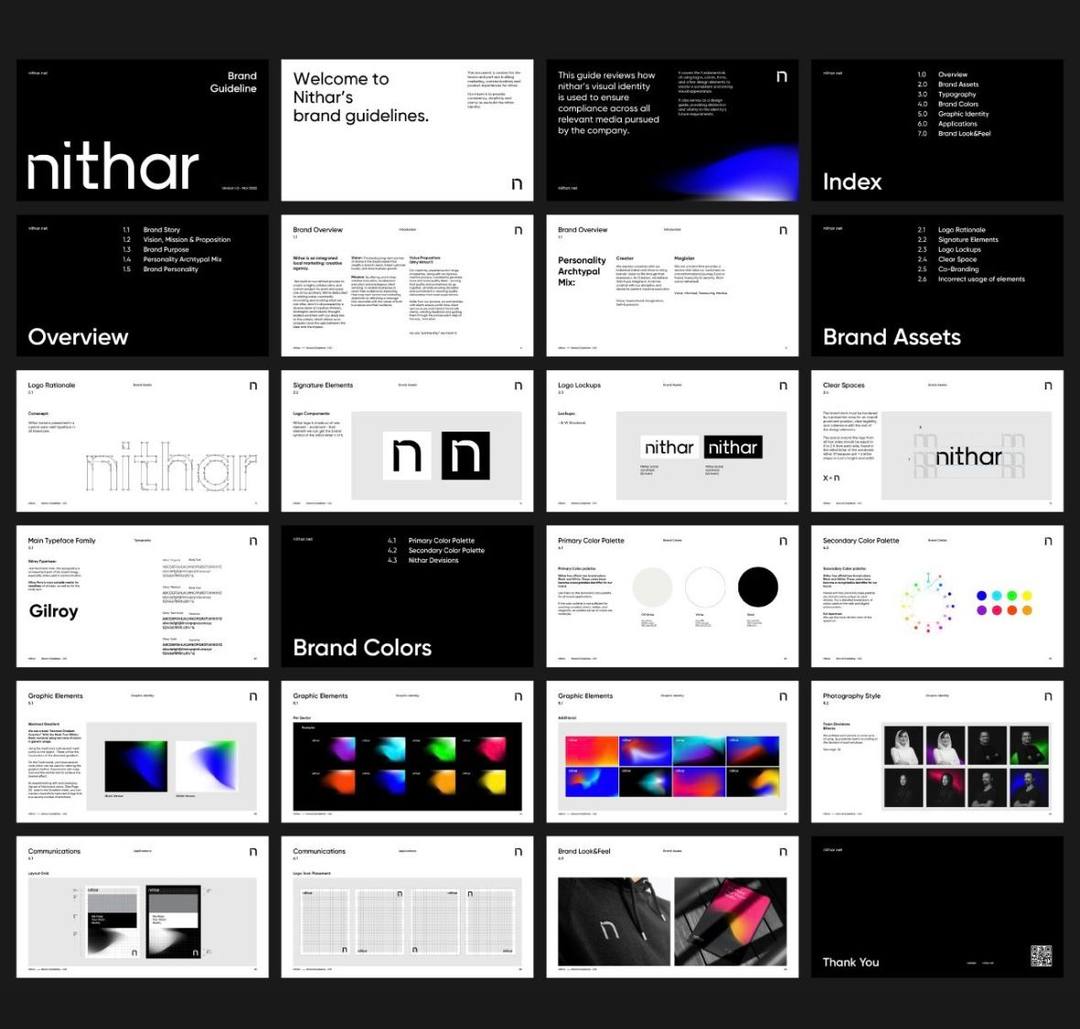
Most rebranding proposals begin with a logo, a color palette, and a typeface. And most end there. But when you look closely at the cases widely recognized as successful rebrands, a clear pattern emerges. What changed was not just the logo, but the products being sold, the distribution channels, and the organization responsible for executing the shift. The visual identity was one part of a far larger transformation.
Reebok Came Back With a Shoe, Not a Logo
In Reebok's domestic relaunch, the most tangible proof of success was not its new brand identity, but a product. The Club C 85, originally designed as a tennis court shoe in 1985, was relaunched in South Korea by LF in October 2022 and sold out its initial stock within two months. Cumulative sales exceeded 150,000 pairs.
A more telling number, however, lies elsewhere. Approximately 70% of Club C 85 buyers were in their teens to thirties. If one goal of the rebrand was to attract a new customer base, this figure is a more direct validation than any brand perception survey. It shows not how people felt about the logo, but who actually chose to buy the product.
What followed was expansion. Reebok extended the Club C lineup, broadened into tennis apparel and windbreakers, and collaborated with brands including Jaunde, Dime, and Kang Hyuk. Derivative lines such as Club C LTD, Club C Ground UK, and Club C Extra continued to build on the original proof of concept. One product demonstrated the direction. Everything else was stacked on top of it.
Without a Product, There Is Nothing to Prove
Merrell followed a similar path. In coverage of Merrell's recent rebranding results, the evidence cited was not a new visual identity, but two specific shoes: the Moab 3 and the Hut Moc 2 Leisure.
For product-centric brands, the question of how to judge whether a rebrand succeeded is not a simple one. Awareness metrics and social media responses alone make it difficult to confirm whether consumers have genuinely accepted a new brand identity. Sales data, on the other hand, reveals whether customers translated that shift into an actual choice.
A rebranding without a designated product to carry the new identity becomes nearly impossible to evaluate. The change can be articulated, but there is no clear standard for determining whether it resonated in the market. A product is both the output of a rebrand and its most direct form of verification.
Innisfree's Rebranding Team Included Product Development and E-Commerce
How a team is structured determines what the project can actually change.
When Innisfree assembled its rebranding task force, the team numbered around 20 people, and it was not filled exclusively with branding and marketing professionals. Global sales, domestic e-commerce, and product development were all represented. The team drew motivated individuals from across departments to work together on what to preserve and what to transform.
When a rebrand is confined to the branding department, the project naturally gravitates toward what that department can directly control: logo, color, typeface, tone of voice, and campaign creative. Changing the product lineup requires product development. Changing how products are sold requires sales and e-commerce. Changing distribution channels requires decision-making authority over those channels to be part of the project from the start.
A rebrand that only changes the logo may not reflect a lack of ambition. It may reflect how the team was composed. If no one empowered to change anything beyond the visual layer is in the room, it is only natural that the output converges on visuals alone.
Simmons pursued a similar approach after 2015, restructuring both its brand communication and distribution as part of its shift toward a premium positioning. Rather than relying on product feature messaging alone, the brand redesigned the entire experience through which consumers encountered it.
Four Questions to Answer Before a Rebrand
For product-centric brands, at least four questions need to be addressed before the work begins.
What will prove the new identity?
Are the metrics for success already defined?
Does the project have authority to change products and channels?
Is there a plan for what gets built after the change?
First, what will prove the new identity? A brand defined by its products needs a product that embodies the new direction. Without a clear answer here, it is worth stepping back to determine whether what is actually needed is a rebrand at all, or a design renewal. If the goal is to modernize the logo, color system, packaging, and design language, there is no need to frame all of that as a rebrand.
Second, are the metrics for success already defined? The measure could be a shift in customer demographics, as with Reebok's 70% share of buyers in their teens to thirties. It could be the sales performance of a specific product, new customer acquisition, or channel-level outcomes. What matters is that success is defined before the project begins, not reverse-engineered from whatever numbers look favorable afterward.
Third, does the project have authority to change products and channels? Can the product lineup be changed? Can the distribution structure be changed? Or is only the communication layer open to revision? The actual scope of what the project can touch needs to be established clearly from the outset. Including areas beyond the team's authority in the stated objectives creates a gap between strategy and execution that is difficult to close.
Fourth, is there a plan for what gets built after the change? After Club C proved its appeal, Reebok expanded the lineup and pursued a series of collaborations. What began with a single product extended into new products and content. A rebrand that stops at one product launch or one campaign rarely generates enough momentum to shift how a brand is perceived overall. Rebranding is less about a single announcement and more about what is consistently built in the years that follow.
What BGROW Asks First When a Rebranding Inquiry Comes In
When a rebranding inquiry reaches us, we save the logo conversation for last. The first three questions we ask are: What will prove the change? How will the change be measured? How far can the change actually go?
If there are no clear answers to those three questions, we return to an earlier question: is this a rebrand, or is it a design renewal? If the actual need is to modernize an aging logo and design system, a design renewal may be entirely sufficient. It also gives the brand a far cleaner scope and clearer cost to work with.
If, on the other hand, the customer base, product portfolio, distribution, and brand positioning all need to shift, a new logo alone will not move any of those. What matters is not what the project is called, but a precise definition of what it will actually change.
The logo is the change customers see first. But being the most visible does not make it the most important decision to make first. If the product stays the same, the places it is sold stay the same, and what the brand says and does for its customers stays the same, a new logo has a very limited ability to change anything.
If nothing else has changed, customers will not feel that the brand has changed. They will simply notice that the logo has. The substance of rebranding lies not in the surface, but in the structure beneath it. At BGROW, that structure is where we begin.